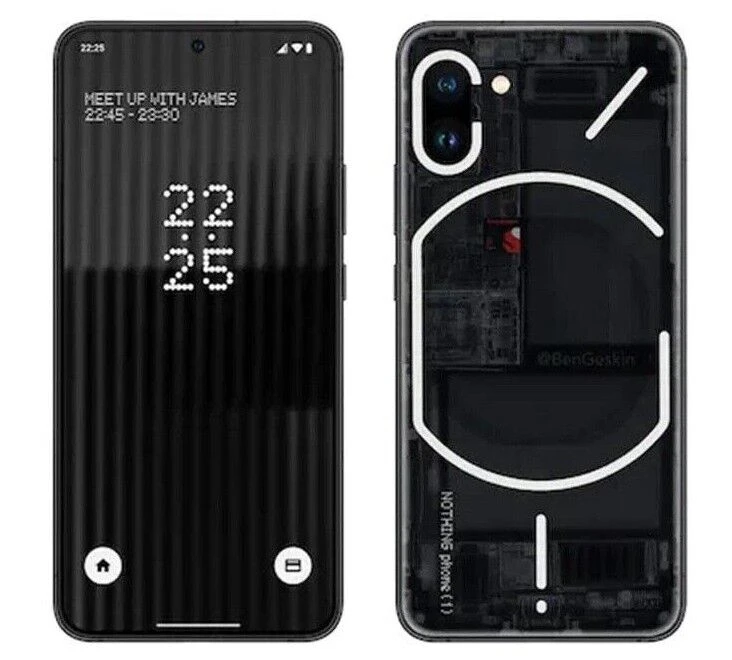
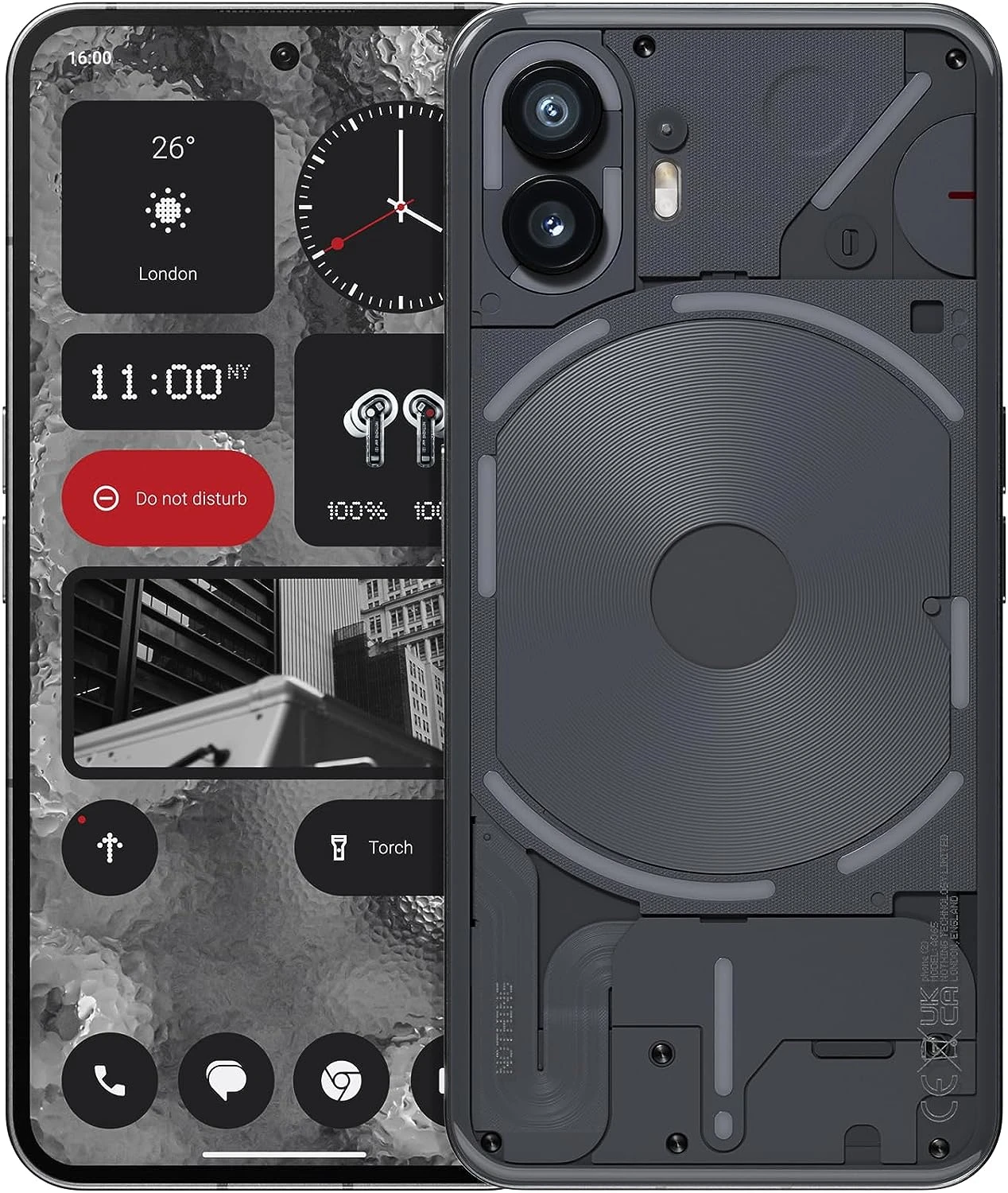
Display
The phone (1) flaunts a 6.55-inch OLED display with a 120Hz refresh rate and 240Hz touch sampling rate. This is a 10-bit color depth panel, it has HDR 10+ certification and it features 1200 nits of peak brightness.
The company has used a flexible OLED display to accomplish the symmetrical bezel design in the device. The screen also has an optical fingerprint sensor for security.
Cameras
Moving on, Nothing is trying to keep things simple when it comes to cameras, which is why it isn’t just going after the numbers. The phone (1) features dual rear cameras headlined by a 50MP 1/1.56′′ Sony IMX766 sensor with f/1.88 aperture and support for OIS and EIS dual stabilization.
The secondary sensor is a 50MP Samsung JN1 ultrawide lens with a 114° field of view. The smartphone can shoot 4K videos, and the ultrawide lens can also function as a macro sensor. Over on the front, there is another 16MP Sony IMX471 sensor for selfies.
Nothing ecosystem
The Nothing OS also immerses you in the Nothing ecosystem, which includes products from its own company and those of other prominent brands. The ecosystem will allow you to control the products directly from your phone (1).
So it’s hardly surprising to see that it is well-suited to their own product portfolio which currently only includes the Ear (1). In this case, the quick setting toggle on the phone (1) lets you choose between ANC modes, connectivity, and other features. Aside from that, Nothing has optimized its ecosystem for Tesla cars, allowing you to connect your phone to the car and do actions like turning on the AC and lights.
We expect the company to grow its product portfolio in the future to align with its vision of the Nothing ecosystem that it plans to rival Apple. Carl Pei has also expressed his desire to blur the boundary between Nothing and its consumers.
Nothing OS
Nothing phone (1) boots on the company’s own Android skin known as “Nothing OS”. The company describes its custom skin as a pure form of Android with only the “essentials”. The OS focuses on delivering a fast, smooth, and personal experience. Nothing OS even incorporates the dot-matrix design that you see on the company’s logo.
Nothing has promised 3 major OS updates and an additional year of security patches which nearly matches Google’s current commitment to the Pixel 6 lineup. A beta version of the Nothing OS Launcher is also available in the Play Store to give users a glimpse of the Nothing OS.
Wireless charging
Nothing phone (1) supports 15W wireless charging, and it is a major part of the phone’s design as well. The phone even has 5W reverse wireless charging for your TWS earbuds and other accessories.
In terms of battery, phone (1) is fueled by a 4500mAh battery bundled along with 33W fast charging. But the company has not included a compatible charger inside the box.
Glyph Interface
The main highlight of the Nothing phone (1)’s design is something called the “Glyph Interface”. Nothing has included a total of five lightning strips with around 900 LEDs that can work both together and as individuals to notify you of notifications, incoming calls, and the charging process.
You can even customize the lighting pattern for certain contacts or notifications. Additionally, the entire back panel can be illuminated at once to serve as a fill light for the cameras.
There’s more—one can even set those backlights to flash in tandem with the built-in ringtones. Users will also have the option to turn off the Glyph interface completely at a certain time of day.
Singularity-focused design
Previously, in an interview with The Verge, Carl Pei stated that Nothing will try to emulate Dyson’s singularity-focused design. He has even convinced Dyson’s former design head, Adam Bates, to lead the design at Nothing. He will be working together with Jesper Kouthoofd and Tom Howard.
- Dimension: 159.2 x 75.8 x 8.3mm, 193.5 grams
- Display: 6.55-inch 10-bit OLED, 120Hz refresh rate, 240Hz touch sampling, Gorilla Glass 5, HDR10+, 1200 nits (peak) brightness
- Resolution: Full HD+ resolution (1080 x 2400 pixels)
- Rear Camera: Dual;
– 50MP 1/1.56′′ Sony IMX766 primary sensor, OIS + EIS
– 50MP Samsung JN1 ultrawide sensor, 114° FoV
- Front Camera: 16MP Sony IMX471 (hole-punch)
- Chipset: Qualcomm Snapdragon 778G+ 5G (6nm)
- OS: Nothing OS based on Android 12 (upgradeable to Android 13)
- Memory: 8GB LPDDR5 RAM, 128GB UFS 3.1 storage (fixed)
- Battery: 4500mAh, 33W fast wired charging
- Wireless Charging: Yes (15W), 5W reverse wireless charging
- Audio: Stereo speakers
- Security: Fingerprint sensor (optical in-display)
- IP Rating: Yes (IP53 dust and splash resistant)
- Colors: White, Black
 english